

Irwin Allen's Lost in Space 1960s Tech Available Today

Lost in Space by Irwin Allen in the 60s was one of the most beloved pieces of sci-fi content that was ever created, leading to 3 seasons of the original series, a pilot series in 2004 that didn't quite take off, a movie in 1998 that wasn't half bad and a Netflix series in 2018 that great entertainment.
Going through Irwin Allen's Lost in Space now ( which I do once every few months ), I see there were quite a few 1960s sci-fi technologies that are actually available now for people to order off the net.
Irwin Allen's Lost in Space 1960s Tech
1. Laser Weapons

With drone warfare being actively used in conflicts around the world currently, along with signal jammers, directed energy weapons such as anti-drone lasers play a large part in countering targeted drones and drone swarms with limitless ammo.
The use of lasers has proliferated to such an extent in everyday life that small companies have begun to sell low-powered lasers in the form factor of a gun.
2. Robots
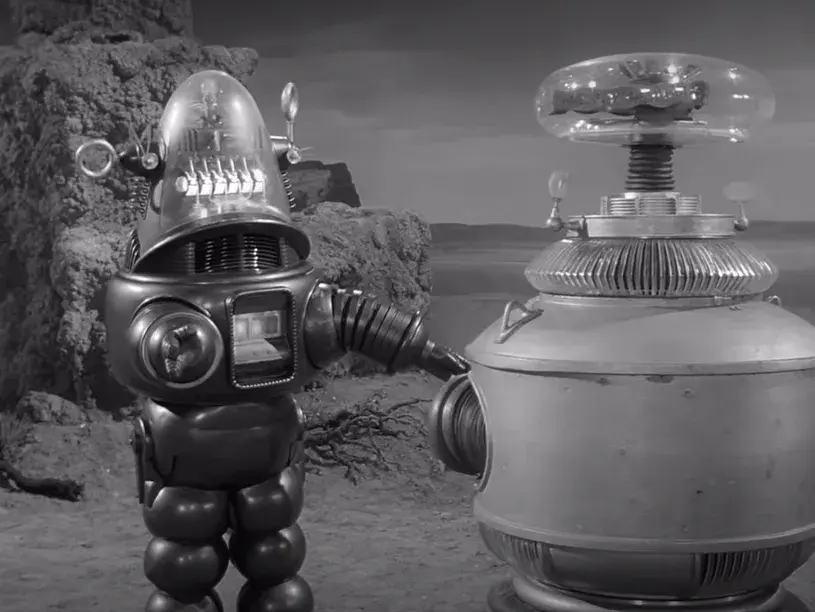
B9 and Robby were excellent robots shown in Lost In Space that could perform feats of strength and precision and work in hazardous environments while keeping the human safe. We have apparently refined that tech into forms that are practical and easy to use.

One of them is the robot dog by Boston Dynamics that set the ball in motion. assuming the form factor of a canine while performing its duties of inspecting power plants, factory floors, and other places that might prove dangerous to humans

Humanoid robots are also taking their place in the market with robots that can perform uniquely human tasks such as dancing, martial arts, and a lot of complex movements that might have uses in the future.
It is concerning, however, that companies that manufacture such robots have been paying people to strap on cameras to their heads to learn the movements for manual work such as tailoring, food preparation, machine repair, and more.
This means that when enough data is collected, the said companies will launch the robots to replace their human workers and save a ton of money from the very people whose training data is running the robots.

3. Jetpack
An often overlooked piece of sci-fi tech is the jet pack that was not only invented early in the 20th century, but has been available for people to use with reasonable margins of safety since then.

The US has had its own version called the Bell Rocket Belt that was actually used in Irwin Allen's Lost in Space well before it was used in the James Bond film Thunderball.
The limitation of the Rocket Belt is obvious, with the fuel being able to propel the person for 20-30 seconds at a time. The use of this tech comes across well even in the first black-and-white season of this awesome series.
You might like The Irwin Allen Lost in Space Legacy
4. Spacecraft
The Shepard is the crown jewel of current commercialized space travel as part of Jeff Bezos Blue Origin efforts. While it isn't designed for sustained space travel, commercialization of space travel is the first step towards affordability in this niche industry and the springboard for new tech to emerge in the sector and benefit the rest of the world. While cordless power tools existed long before spaceflight was achieved, the needs of astronaut to repair equipment and sections of their spacecraft accelerated development in the cordless tools niche. The batteries for the tools got more efficient and were soon integrated into consumer electronics as well.
5. Forcefield

One of the coolest pieces of tech was the forcefield generator used by the Robinson family to ward off any harmful aliens or hostile entities as it wraps around the Jupiter 2 on the alien planet it's currently on. While force fields have never been publicly announced, there has been a freak incident where enough static electricity was produced in a 3M facility that makes tape that it produced an invisible field that repels a fully grown adult from coming close to the source of the field. We already have good visual and radiation cloaking tech down, such as translucent sheets that make whole cars disappear and radar-absorbent paint that makes most stealth planes disappear from radar screens or shrink the radar signature to the size of a bird or smaller. Microwave shields or camouflage are already in use by militaries across the world.
To protect critical electronics, people have already been using highly advanced Faraday Cages with copper-layered wires and similar protection for circuit boards. The protection is aimed at blocking the effects of an Electromagnetic Pulse (EMP) weapon.


